

Celebrating the Power of People: Smaller Scale Handyperson Service
Johanna Schuster-Craig launched Smaller Scale, a Lansing-based company that completes small home projects and repairs, after identifying that her skill set could fill a need in the community. By strategically hiring workers who are women and/or identify as LGBTQ+, she is adding diversity to the handyperson field and is able to offer more options for clients who may want to hire a contractor they more closely identify with.
“Michigan has a high rate of home ownership, but the housing stock is older, and the private homeowners often don’t know how to maintain their properties,” Johanna says. “On top of this, people — especially women, people who identify as LGBTQ+, and elderly persons — have different comfort levels with who they invite into their homes. It’s important for people to have a choice. We need to have different people we can send in.”
Having honed her handyperson skills through various home renovation projects for herself and her family members over the years, Johanna — then a tenured professor at MSU — decided to start her own business and fill the gap for contractors available to complete small home projects that larger companies often do not take on.
Johanna enrolled in Lansing Community College and earned a Builder’s License, which allows businesses to contract for work on structures that require a building permit or where labor and material costs exceed $600. There, she learned the ins and outs of permitting, inspections, and more.
The class was a great opportunity to get a glimpse of what owning a business in this industry would be like, and to start making connections.
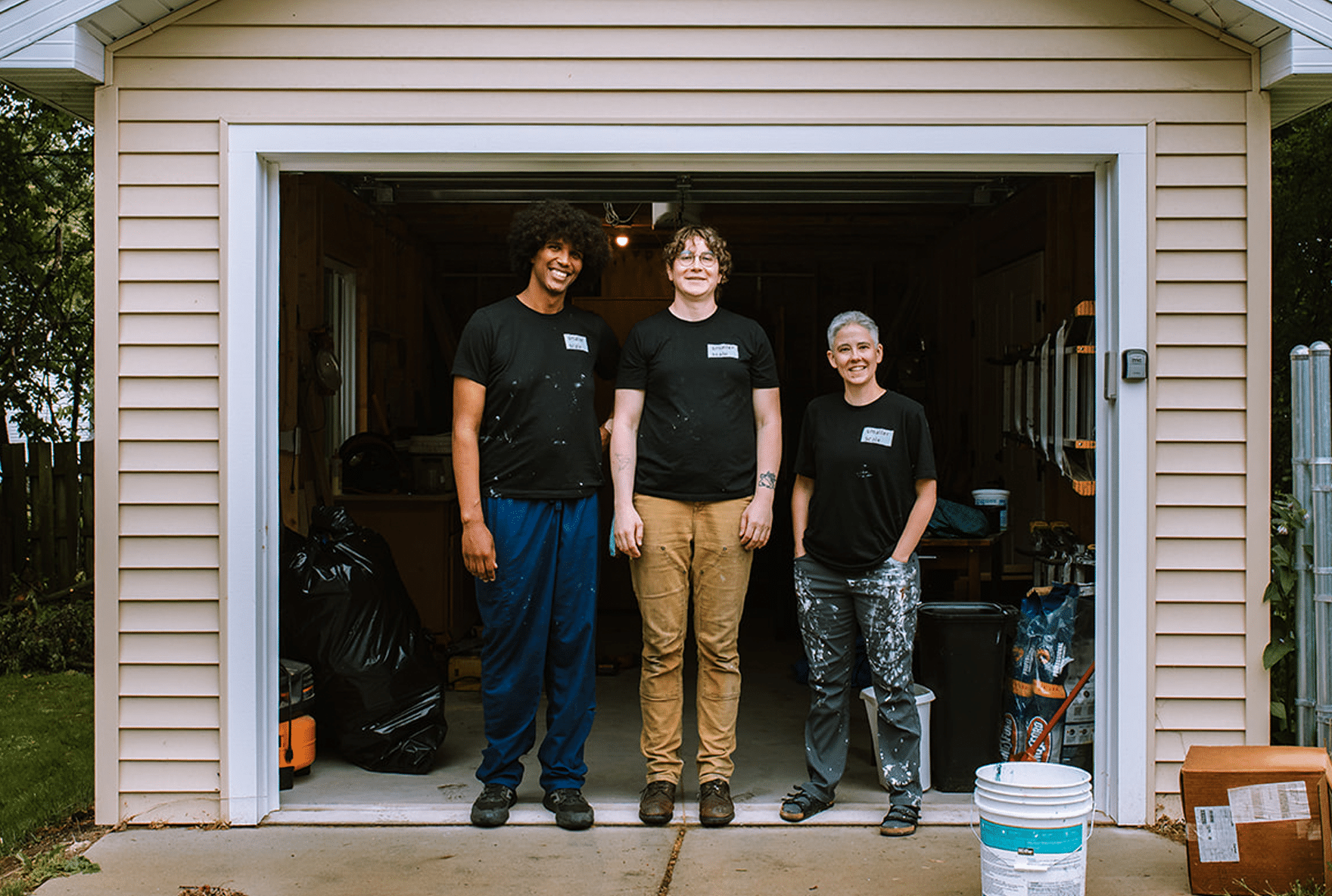
Johanna launched her business in fall 2023, and seven months later was able to hire a part-time staffer. Now, she’s hired a second part-time employee to keep up with demand. Together, they offer everything from custom carpentry, drywall installations, and painting, to smaller projects like hanging lights and pictures and assembling furniture.
She credits her accelerated business growth to the support she received from LEAP’s TREK Small Business Support Hub.
“TREK hit a lot of critical flex points for a startup,” Johanna says. Her conversations with LEAP’s Vice President of Small Business and Innovation, Harrison Leffel-Jones, who oversees the TREK initiative, helped her hone her business model, financing, and planning.
TREK helps small businesses launch and grow, connecting entrepreneurs with the right funding, training, and other resources across Clinton, Eaton, and Ingham Counties. It’s a one-stop-shop for all operational, business, and marketing needs.
Johanna was working with the Small Business Development Center when she learned about the TREK Small Business Support Hub. She applied through an easy online application. LEAP worked with her to refine her funding request, and in the end, LEAP supported the startup across three critical areas: professional membership, training, and equipment.
Through TREK, Smaller Scale was accepted into the Fund Your Acceleration program, where she received funding and mentorship. Fund Your Acceleration (FYA) is a joint program sponsored by LEAP and the Lansing Regional SmartZone, in collaboration with the Michigan Small Business Development Center (SBDC), Michigan Economic Development Corporation (MEDC), and MSU Research Foundation to fuel startup growth across the Lansing Region. FYA connects entrepreneurs with financial support and resources across local and statewide networks to allow these businesses to scale successfully, create meaningful jobs, and attract further investment.
Funding from the FYA program allowed Johanna to secure a critical membership to the Home Builders Association (HBA), where she networks with other contractors for lead generation and grows her referral network for larger projects her company does not work on.

As one of the few women in the HBA, she recognizes the importance of introducing more diversity into associations like this to give homeowners more choices in who they invite into their homes — and she understands that having the wealth and financial resources to pay for startup costs and business growth levers like memberships are a barrier for many, underscoring the importance of LEAP removing this barrier for her.
“Even if you have an entrepreneurial spirit, if you don’t have access to some kind of wealth, it is so hard to get up and running — that’s why LEAP’s safety support net is so important for entrepreneurs,” Johanna explains.
She also applauds LEAP for creating an entrepreneurial ecosystem that facilitates networking, and says she gained valuable insight from talking with other startup founders and program alumni about similar challenges and solutions-based approaches.
The second critical area that the TREK Small Business Support Hub supported was training and professionalization. LEAP’s funding paid for the tuition at Lansing Community College for Johanna to attend a required OSHA training that allowed her to develop a safety program for her employees, which is critical not only to her employees’ well-being. It was a more efficient and sustainable route than paying for current and future employees to take the training individually.
Finally, the TREK grant paid for equipment to enhance safety and efficiency. Proper gear better protects her team, especially in instances when they’re dealing with hazardous materials such as the silica from sanding drywall. The business purchased professional machines, including a vacuum sander for large drywall repair and a paint sprayer for faster, smoother paint jobs. New shelving makes preparing for jobs and inventorying faster and easier, allowing the company to serve more customers.
Smaller Scale grew quickly and has served over 100 clients to date. Johanna is proud that over 30% of customers are repeat customers.
The first year was a learning curve on the business operations side, including operational efficiencies, estimating the full cost of a project, accounting, maintaining cash flow, marketing, and establishing a digital presence. She also faced a lot of debt.
But now she’s optimistic about the future, despite the challenge of responding to external factors that impact her pricing and operations, such as changing tariffs on lumber, tools, and other materials needed for every project.
Johanna now serves on the Ingham County Housing Trust Fund Workforce Development Committee and hopes to continue growing her business and serving her community.
Category: People Infrastructure, Small Business, Uncategorized