
Lansing Region Calls for Transfer of Local and State Incentives Supporting Game-Changing EV Battery Plant Project
Regional Leaders Endorse MSF Board Approval for Transformational Investment
Lansing, Mich. (March 24, 2025) — A broad coalition of Lansing Region municipalities, utilities, business leaders, economic and workforce development organizations and educational institutions are calling on the Michigan Strategic Fund (MSF) board and Lansing City Council to approve the transfer of all respective incentives to LG Energy Solution, a move that will solidify the region’s position as a leader in the electric vehicle and battery industries, and broader mobility sector.
Delta Township, Lansing Economic Area Partnership (LEAP), Capital Area Michigan Works! (CAMW!), Lansing Community College (LCC), Lansing Board of Water & Light (BWL), and the Lansing Regional Chamber of Commerce (LRCC) today collectively urge the MSF Board and the Lansing City Council to approve the transfer at its March 24 council meeting and MSF board to approve the transfer at its March 25 meeting.
“This transition strengthens the Lansing region’s position as a leader in battery manufacturing, bringing increased investment, sustained jobs creation and a more diversified battery manufacturing ecosystem. LG Energy Solution is a global leader in developing and producing high-voltage batteries and related technology for electric vehicles, energy storage systems and mobility and IT applications,” said Bob Trezise, president and CEO of LEAP.
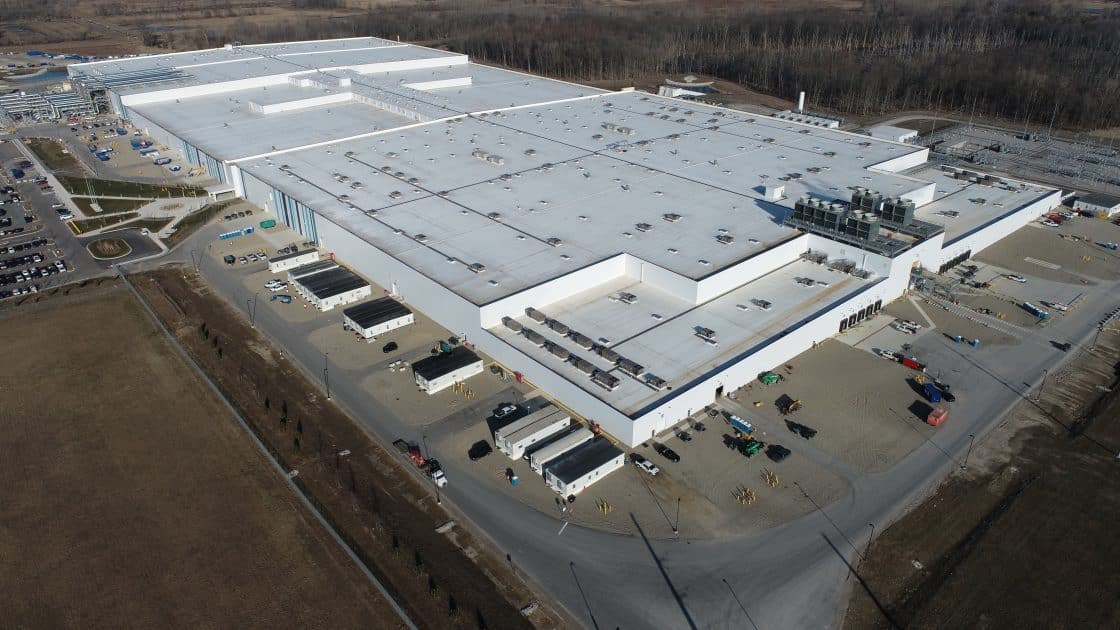
With the transfer of the incentives, LG Energy Solution will be one step closer to becoming the sole owner of the nearly completed $2.6 billion, 2.8 million-square-foot electric vehicle (EV) battery plant located in a shared-revenue area of Lansing and Delta Township. The original incentives’ recipient, Ultium Cells LLC, is a 50-50 battery cell-making joint venture between General Motors and LG Energy Solution. LG Energy Solution represents the electrochemical and battery-making expertise within the joint venture.
MSF funding provided through the Critical Industry Program was invested as intended, and LG Energy Solution expects to meet all job creation commitments required by the program, up to 1,700 good jobs at full operations.
Construction at the Lansing battery cell-making facility is approximately 98 percent complete – average employment onsite since 2020 has been about 1,000 all-union tradespeople per day with peak employment of 1,700 per day in Q1 of 2024.
“With its talented workforce and location in the heart of the U.S. auto industry, we see Michigan as a great bet to continue investing in,” said Bob Lee, Corporate Executive Vice President and Head of North America, LG Energy Solution. “We are playing a critical role in onshoring this strategic technology, and our investment in Lansing underscores our belief in the state, in which we established our first-ever North American battery-making plant in 2011.”
With General Motors maintaining a strong presence in the Lansing region, this transition marks the arrival of another global leader. LG Energy Solution has demonstrated transparency and a firm commitment to the region, reinforcing its role as a key partner in Lansing’s economic future.
Since 2010, LG Energy Solution has invested more than $3 billion in its Holland, Michigan cell plant. This growing presence will significantly and positively impact Michigan, with the Lansing facility serving as a key part of its production network in North America.
As part of its long-term investment, LG Energy Solution is actively collaborating with local partners to fulfill workforce commitments:
- Lansing Community College (LCC), ranked as the nation’s no. 2 technical training school, is working closely with LG Energy Solution to train nearly 2,000 new workers.
- Capital Area Michigan Works! (CAMW!) is partnering with LG Energy Solution and LEAP to facilitate a Talent Hub program supporting workforce recruitment through 2027.
- Lansing Board of Water & Light (BWL) is prepared to supply major energy needs for the plant, reinforcing affordable residential electric rates for local customers.
In late 2022, Michigan fiercely competed to secure this investment, leading to an incentive package that included:
- A new revenue-sharing agreement between Lansing and Delta Township.
- $120 million in state SOAR funds supporting transformational job creation and investment.
- $66.1 million for critical-public infrastructure improvements led by BWL and Delta Township, funded by Strategic Site Readiness Program (SSRP) grant dollars administered by LEAP.
- Electric rate incentives from BWL to support long-term sustainability.
The facility is now undergoing final preparations to manufacture some of the world’s most innovative batteries, serving customers from automotive and other global industries.
The Lansing region stands united in strong support of the approvals of Lansing City Council and the MSF Board to transfer incentives—ensuring the success of this transformational investment and Michigan’s leadership in the electrification revolution. The partners are confident that further investments and major customer announcements down the road will enhance the region’s economic strength and competitiveness of directly involved companies as well as broader local, statewide and US supply chain.
“We’re grateful for General Motors’ ongoing presence, and now we gain a second global powerhouse in LG Energy Solution,” Trezise said. “Their transparency and commitment to our region have been outstanding, and we are honored to call them a partner in Lansing’s future.”
“We welcome LG Energy Solution with open arms,” said Fonda Brewer, Delta Township supervisor. “This project represents one of the largest construction efforts in North America and may be the single largest in Michigan’s history. The economic impact for our region is monumental. Delta Township worked in coordination with (and in record time) to construct key sewer and wastewater treatment infrastructure to serve the new plant, ensuring its success and long-term viability.”
“This is one of the most significant projects our region has ever seen,” said Dick Peffley, BWL general manager. “The plant’s substantial energy needs will help keep electric rates affordable for our residents while solidifying our position as a leader in reliable energy manufacturing.”
“The competition for major economic projects is fierce,” said Tim Daman, president of the Lansing Regional Chamber of Commerce. “The continuation of this investment is a huge win—not just for our economy, but for small businesses, schools, and public services that depend on a growing tax base.”
About LEAP
The Lansing Economic Area Partnership (LEAP) is a coalition of area leaders partnering to build a stronger community for all—working every day to grow, retain and attract business to the Lansing, Michigan, region.
About the Lansing Regional SmartZone
The Lansing Regional SmartZone (LRSZ) drives growth in the Greater Lansing region’s high-tech sector by funding local partners to deliver exceptional entrepreneurial support services. The LRSZ is a partnership between City of East Lansing, City of Lansing, East Lansing Public Schools, Ingham County, Lansing Community College, Lansing School District, Lansing Economic Area Partnership (LEAP), the Michigan Economic Development Corporation (MEDC), Michigan State University Innovation Center, and Michigan State University Research Foundation. A dynamic organization of leaders from all backgrounds and business sectors, the LRSZ has locations in downtown East Lansing at the Technology Innovation Center (TIC) and in Lansing at the MSU Health Park.
LRSZ is funded by the Michigan Economic Development Corporation (MEDC).
Category: Press Releases, Economic Development News, News & Announcements